Introduction
In today’s fast-paced world, energy is more than just a luxury; it’s a necessity. People often blame stress, lack of sleep, or poor diet for fatigue, but one of the most overlooked factors is vitamin intake. Vitamins act as catalysts in the body, turning the food we eat into usable energy while ensuring every cell functions efficiently.
In our last article, we explored the omega-3 fatty acids benefits and saw how healthy fats reduce inflammation, improve heart health, and protect the brain. But fats alone can’t fuel you through the day. For consistent vitality, vitamins are non-negotiable.
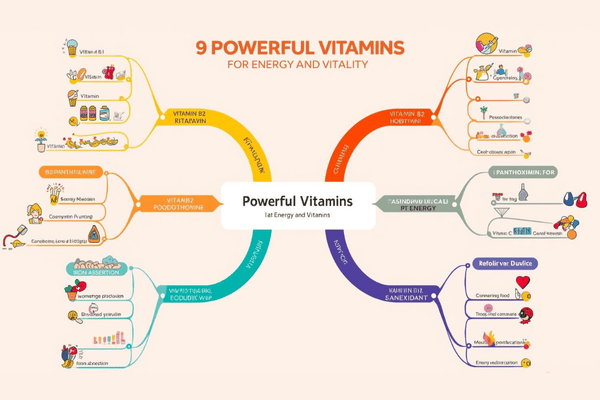
This article dives into the 9 powerful vitamins for energy and vitality, explaining their roles, food sources, deficiency signs, and how they interact to keep you feeling your best.
Why Vitamins Matter for Energy
Unlike macronutrients such as protein, carbs, and fats, vitamins don’t provide calories. Instead, they help the body unlock and use those calories for energy. Without them, the body struggles to produce ATP (adenosine triphosphate), the molecule responsible for powering every function in the body.
A deficiency in even one vitamin can lead to fatigue, poor concentration, weakened immunity, and overall sluggishness. That’s why maintaining a balanced intake is crucial.
1. Vitamin B1 (Thiamine): The Spark Plug
Thiamine plays a central role in converting carbohydrates into energy. Often called the “spark plug” of the body, it supports nerve function and muscle coordination.
- Food Sources: Whole grains, sunflower seeds, pork, legumes.
- Deficiency Signs: Fatigue, irritability, poor reflexes and memory issues.
- Why It Matters: Without B1, the body cannot effectively use carbs, leading to energy crashes.
2. Vitamin B2 (Riboflavin): The Energy Converter
Riboflavin helps convert food into ATP and supports the metabolism of fats and proteins. It also acts as an antioxidant, reducing oxidative stress.
- Food Sources: Milk, yoghurt, eggs, almonds, spinach.
- Deficiency Signs: Cracks at the corners of the mouth, sore throat, eye fatigue.
- Why It Matters: A steady supply ensures muscles and cells produce energy efficiently.
3. Vitamin B3 (Niacin): The Metabolic Booster
Niacin is crucial for over 400 enzymatic reactions in the body, most of which relate to energy metabolism. It also supports healthy cholesterol levels.
- Food Sources: Chicken, tuna, peanuts, mushrooms, brown rice.
- Deficiency Signs: Fatigue, poor digestion, depression and skin rashes.
- Why It Matters: Adequate niacin intake means smoother metabolism and better stamina.
4. Vitamin B5 (Pantothenic Acid): The Stress Fighter
Pantothenic acid is essential for producing coenzyme A, which helps metabolise fats, proteins, and carbohydrates. It’s also linked with adrenal health, making it important for stress management.
- Food Sources: Avocados, eggs, mushrooms, sweet potatoes, whole grains.
- Deficiency Signs: Fatigue, headaches, insomnia, digestive issues.
- Why It Matters: By supporting the adrenal glands, B5 helps the body cope with stress while maintaining energy.
5. Vitamin B6 (Pyridoxine): The Protein Processor
Vitamin B6 helps metabolise amino acids and produces neurotransmitters like serotonin and dopamine. These chemicals affect mood, energy, and sleep.
- Food Sources: Chickpeas, salmon, bananas, fortified cereals.
- Deficiency Signs: Fatigue, irritability, confusion, weakened immunity.
- Why It Matters: Low B6 means poor protein metabolism and reduced neurotransmitter production, which directly lowers energy levels.
6. Vitamin B7 (Biotin): The Beauty and Energy Vitamin
Biotin is often marketed for hair, skin, and nails, but its real value lies in energy production. It helps convert fats, carbs, and proteins into fuel.
- Food Sources: Eggs, nuts, seeds, sweet potatoes.
- Deficiency Signs: Fatigue, brittle nails, hair thinning, and skin rashes.
- Why It Matters: Without biotin, the body struggles to use nutrients for fuel effectively.
7. Vitamin B9 (Folate): The Oxygen Carrier
Folate is essential for red blood cell production, which transports oxygen throughout the body. Oxygen delivery is critical for sustained energy and focus.
- Food Sources: Leafy greens, beans, lentils, citrus fruits.
- Deficiency Signs: Fatigue, irritability, anaemia, poor concentration.
- Why It Matters: Folate keeps the blood oxygen-rich, preventing the tiredness linked with anaemia.
8. Vitamin B12 (Cobalamin): The Energy Powerhouse
B12 is one of the most famous vitamins for energy and vitality. It supports red blood cell production, DNA synthesis, and nervous system function.
- Food Sources: Meat, poultry, fish, dairy, fortified plant-based milk.
- Deficiency Signs: Severe fatigue, numbness, memory problems, weakness.
- Why It Matters: B12 deficiency can cause extreme tiredness and is common in vegans unless they use fortified foods or supplements.
9. Vitamin D: The Sunshine Vitamin
Beyond bone health, vitamin D influences energy levels, immune function, and mood. Low vitamin D levels are often linked with chronic fatigue and depression.
- Food Sources: Fatty fish, egg yolks, fortified dairy and sunlight exposure.
- Deficiency Signs: Fatigue, frequent illness, weak bones, low mood.
- Why It Matters: Adequate vitamin D ensures better energy, stronger bones, and improved overall vitality.
Other Vitamins That Support Vitality
While the nine above are the stars, others play supporting roles:
- Vitamin C: Reduces fatigue by fighting oxidative stress.
- Vitamin E: Protects cells and supports muscle function.
- Vitamin K: Improves circulation and reduces the risk of energy dips.
Signs You May Be Deficient in Energy-Boosting Vitamins
- Constant tiredness
- Brain fog and poor focus
- Weakness and low stamina
- Mood swings and irritability
- Frequent colds or infections
If these sound familiar, your diet may lack key vitamins.
How to Get Enough Vitamins for Energy and Vitality
Through Food
- Eat a variety of colourful fruits and vegetables daily.
- Include lean proteins and whole grains.
- Don’t skip healthy fats like those in fish, nuts, and seeds.
Through Supplements
While food is the best source, supplements may be needed for certain groups:
- Vegans (B12, D)
- Elderly (B12, D)
- Pregnant women (Folate, B vitamins)
- People with limited sun exposure (Vitamin D)
Always consult a healthcare provider before starting supplements.
Practical Tips for Daily Energy
- Start your morning with a vitamin-rich smoothie (spinach, banana, chia seeds, almond milk).
- Pair protein with B vitamins for balanced energy release.
- Spend 15 minutes in sunlight daily for vitamin D.
- Limit processed foods that deplete vitamin stores.
- Stay hydrated, since dehydration amplifies fatigue.
The Link Between Vitamins and Omega-3 Fatty Acids
In our last article on omega-3 fatty acids benefits, we saw how healthy fats reduce inflammation and support brain health. When combined with vitamins, particularly B-complex and vitamin D, the body runs more smoothly. This synergy ensures energy is not only produced but also sustained throughout the day.
Looking Ahead: Minerals for Strong Bones
Vitamins provide the spark, but minerals offer the structure. Next, we’ll explore minerals for strong bones, where calcium, magnesium, and phosphorus take the spotlight in keeping the body resilient and active.
Conclusion
Energy isn’t just about willpower: it’s about biology. The vitamins for energy and vitality act as the body’s natural engine oil, ensuring every system runs smoothly. From the B-complex that powers metabolism to vitamin D that keeps mood and stamina high, these nutrients are essential for daily performance and long-term health.
By focusing on whole foods, supplementing when necessary, and combining vitamins with other essentials like omega-3s and minerals, you create a lifestyle where energy is sustainable, natural, and consistent.
Your body has the potential to feel energised every day; you just need to fuel it with the right vitamins.