Pre Workout Nutrition Introduction: The Fuel That Starts It All
What you eat before a workout can determine how you perform during it. Whether you’re lifting weights, running long distances, or practising yoga, your body relies on the right fuel to power through each movement.
Pre workout nutrition isn’t just about eating something; it’s about timing, balance, and smart food selection. A well-planned pre-workout meal can boost stamina, prevent fatigue, and improve overall performance.
In Best Post-Workout Foods for Recovery, we explored how to refuel after training. Today, we focus on the pre-workout phase how to prepare your body with the right nutrients for maximum strength and endurance.
And in Foods That Help Prevent Heart Disease, we’ll move from performance to protection, examining how nutrition keeps your heart strong.
Why Pre Workout Nutrition Matters
Exercise uses up glycogen, the stored form of energy in your muscles. Without proper fuel, your body can feel sluggish, leading to reduced performance and slower muscle gain.
A solid pre-workout meal helps:
- Maintain stable energy levels
- Improve focus and endurance
- Prevent muscle breakdown
- Enhance strength and speed
- Reduce post-workout fatigue
According to the International Society of Sports Nutrition (ISSN), consuming a balanced meal 2–3 hours before training significantly improves workout output and recovery rate.
The Science of Pre Workout Nutrition
Pre-workout meals should include the three macronutrients: carbohydrates, protein, and fat, but in different ratios depending on timing.
- 2–3 hours before workout: Balanced meal with carbs, protein, and fats.
- 30–60 minutes before workout: Light snack with quick-digesting carbs and protein.
Why:
Carbs provide immediate energy, protein prevents muscle breakdown, and fats help sustain energy during longer workouts.
10 Power Foods for the Perfect Pre Workout Nutrition
1. Oatmeal with Fruit Sustained Energy
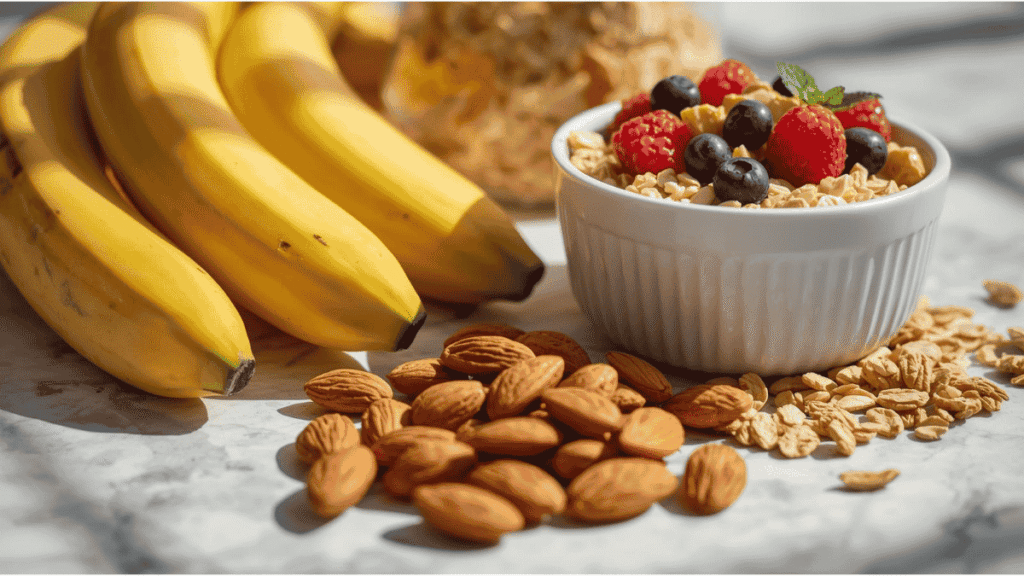
Oats are complex carbohydrates that release energy slowly, helping to keep blood sugar steady throughout your workout.
Add bananas or berries for a quick boost of natural sugars.
When to eat: 1–2 hours before training.
2. Bananas The Natural Energy Bar
Bananas are rich in potassium and natural sugars, perfect for maintaining nerve and muscle function.
Ideal for: Morning workouts or pre-cardio fuel.
Pair with: A tablespoon of peanut butter for protein.
3. Greek Yogurt with Honey Fast and Balanced Fuel
Greek yogurt provides protein for muscle support, while honey adds quick glucose energy.
Why it works: The combo supports both short and long workout durations.
4. Brown Rice with Chicken: The Classic Pre-Workout Meal
This balanced meal offers complex carbs, lean protein, and low-fat, ideal for sustained performance.
Timing: 2–3 hours before strength or endurance sessions.
5. Smoothies Quick Energy in a Glass
A smoothie made with milk, fruits, oats, and a scoop of protein powder provides quick energy and hydration.
Bonus: Add spinach for extra antioxidants without changing the taste.
6. Whole Grain Toast with Egg or Nut Butter
Provides both quick and lasting energy. The carbs in toast fuel your muscles, while the protein and healthy fats sustain you.
Great for: Morning training or fasted cardio.
7. Coffee: The Natural Performance Booster
Caffeine increases focus, reduces perceived effort, and boosts metabolism.
Ideal amount: 1 cup, 30–45 minutes before exercise.
Avoid: Excess caffeine it can cause dehydration.
8. Sweet Potatoes The Stamina Enhancer
Packed with complex carbs, potassium, and antioxidants, sweet potatoes stabilise blood sugar and provide long-lasting energy.
Pair with: Grilled fish or eggs for a complete pre-workout meal.
9. Apples and Peanut Butter Quick and Efficient Snack
Apples deliver quick energy from natural sugars, and peanut butter adds healthy fats and protein.
Best for: Pre-workout snack when short on time.
10. Beetroot Juice: The Endurance Secret
Research from Harvard Health (2023) found that beetroot juice increases nitric oxide levels, improving blood flow and endurance.
Drink: 200–250 ml about 1 hour before exercise.
The Ideal Pre-Workout Meal Timing
| Time Before Workout | Meal Example | Nutrient Focus |
|---|---|---|
| 3 Hours | Chicken + brown rice + vegetables | Balanced macronutrients |
| 1–2 Hours | Oatmeal + banana + milk | Carbs + protein |
| 30 Minutes | Fruit + yogurt / protein smoothie | Quick carbs + amino acids |
Hydration: The Overlooked Pre-Workout Element
Dehydration reduces strength and endurance by up to 15%, according to Mayo Clinic research.
Hydration Tips:
- Drink 400–600 ml of water 2 hours before training.
- Sip 200 ml every 20 minutes during exercise.
- Avoid high-sugar or carbonated drinks.
Use a Water Intake Calculator to track your hydration goals daily.
What to Avoid Before a Workout
- Heavy or greasy meals slow digestion.
- Excessive caffeine dehydration risk.
- High fiber can cause bloating.
- Sugary snacks quick crash in energy.
Pre Workout Nutrition | Research Insights and Expert Views
- ISSN (2023): Athletes who ate a carb-protein combo pre-workout performed 20% longer than those who fasted.
- Harvard Health: Moderate caffeine intake improves endurance and focus.
- WHO: Balanced pre-workout nutrition reduces fatigue and muscle breakdown.
Sample One-Day Pre Workout Plan
| Meal | Example | Purpose |
|---|---|---|
| Breakfast (2 hrs before) | Oats + milk + banana | Sustained energy |
| Snack (30 min before) | Yogurt + honey | Quick fuel |
| During Workout | Water or coconut water | Hydration |
| Post-Workout | Protein shake + fruit | Muscle repair |
Common Myths About Pre Workout Nutrition
Myth 1: You should work out on an empty stomach.
Fact: It may cause fatigue and muscle loss.
Myth 2: Energy drinks are the best pre-workout option.
Fact: They can cause dehydration and sugar spikes.
Myth 3: Only athletes need pre-workout meals.
Fact: Anyone exercising benefits from proper fueling.
Tips to Customise Your Pre Workout Meal
- Adjust carb intake based on workout intensity.
- For weight loss, reduce fat intake and keep meals light.
- For muscle gain, increase protein and complex carbs.
- Track your meals using a nutrition app or planner.
Conclusion: Eat Smart, Train Hard
A great workout starts with great preparation, and nutrition is at the heart of it.
By choosing the right foods before you train, you’re not just giving your muscles energy; you’re giving them endurance, focus, and power.
Fueling your body properly ensures you get the most out of every rep, sprint, or pose. Because true performance isn’t just about how hard you train, it’s about how well you prepare.
As we move into Foods That Help Prevent Heart Disease, we’ll explore how these same nutritional principles protect long-term heart health.
Disclaimer
This article is intended for informational purposes only. Always consult a certified nutritionist, fitness expert, or physician before making major dietary or supplement changes, especially if you have underlying health conditions.
30 FAQs About Pre Workout Nutrition
Q1. What should I eat before a workout?
Balanced carbs and protein like oats, fruit, or yogurt.
Q2. How long before should I eat?
2–3 hours for full meals, 30 minutes for snacks.
Q3. Are bananas good pre-workout?
Yes, they provide quick energy and potassium.
Q4. Should I drink coffee before training?
Yes, in moderation improves focus.
Q5. What’s the best pre-workout meal for weight loss?
Oatmeal or boiled eggs with fruit.
Q6. Can I work out on an empty stomach?
Not ideal; it can cause fatigue.
Q7. What to drink before exercising?
Water or beetroot juice for stamina.
Q8. Should I eat fats before workouts?
A small amount is fine for long sessions.
Q9. What’s the best pre-workout snack?
Banana with peanut butter or yogurt with honey.
Q10. Is it okay to eat rice before workouts?
Yes, brown rice offers lasting energy.
Q11. Can I have protein shakes before exercising?
Yes, 30–45 minutes before is perfect.
Q12. Are pre-workout supplements safe?
Only if certified and used under expert guidance.
Q13. How much water before workouts?
400–600 ml two hours before training.
Q14. Can I drink milk before a workout?
Yes, in small amounts; it provides protein.
Q15. Should I skip breakfast before a morning workout?
No, eat something light like fruit or toast.
Q16. What foods give instant energy?
Fruits, smoothies, or energy bars.
Q17. Can I eat eggs before training?
Yes, they’re rich in protein and amino acids.
Q18. Do I need to count calories before workouts?
Focus on balance, not numbers.
Q19. What’s the best carb before training?
Oats, rice, or sweet potatoes.
Q20. How does timing affect performance?
Proper timing prevents fatigue and muscle breakdown.
Q21. Are nuts good before workouts?
Yes, for long sessions due to healthy fats.
Q22. Can I eat chocolate before exercise?
Dark chocolate in moderation can boost energy.
Q23. What’s the role of protein in pre-workout?
Prevents muscle breakdown during exercise.
Q24. Is hydration important before exercise?
Absolutely, it prevents cramps and fatigue.
Q25. Can caffeine harm workouts?
Excess caffeine dehydrates and increases heart rate.
Q26. Should I eat differently for cardio vs. strength?
Yes cardio needs more carbs, strength more protein.
Q27. Can smoothies replace pre-workout meals?
Yes, if they include carbs and protein.
Q28. What if I feel tired before workouts?
Have a quick carb snack like fruit.
Q29. Can I eat junk food pre-workout?
Avoid it causes bloating and sluggishness.
Q30. Is timing or food more important?
Both balance and timing work together for results.