Table of Contents
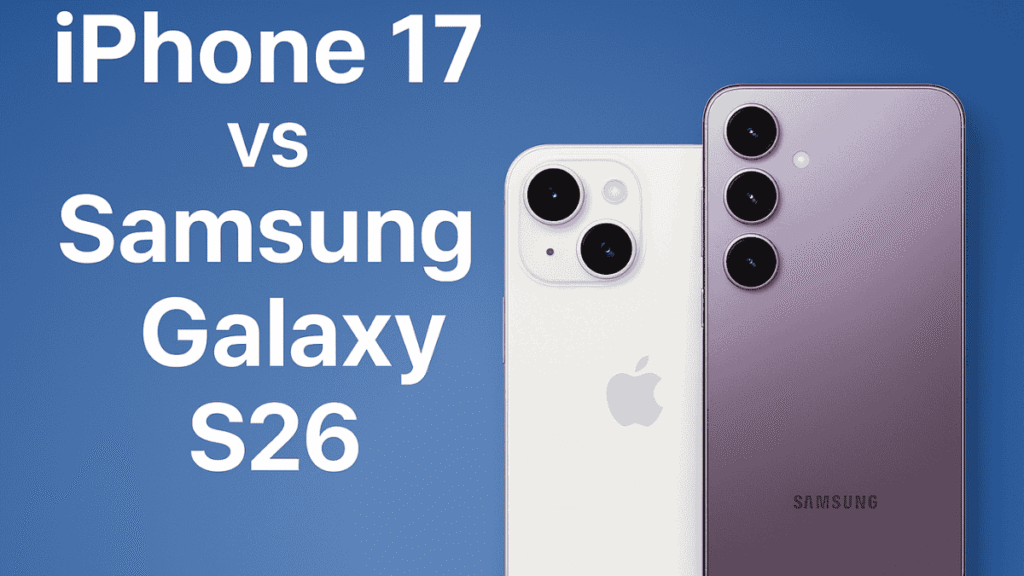
The global smartphone rivalry between Apple and Samsung is one of the most closely followed in tech. Every year, both companies push boundaries with new designs, stronger processors, advanced camera technology, and smarter AI features. In 2025, the stage is set for another major showdown with the launch of Apple’s iPhone 17 series in September and Samsung’s Galaxy S26 series expected in early 2026.
Both lineups bring exciting changes: Apple is experimenting with its slimmest-ever iPhone, while Samsung is rumoured to be working on the most powerful camera in mobile history. If you’re planning to upgrade your device soon, here’s a complete head-to-head comparison of the iPhone 17 vs Samsung Galaxy S26 based on all the leaks and reports available.
iPhone 17 vs Samsung Galaxy S26 | Design and Build Quality
Apple has always favored a minimalist approach, and this year the iPhone 17 Air is stealing the spotlight. At just 5.5 mm thin, it is expected to be the lightest and thinnest iPhone ever made. Apple is reportedly using a titanium-aluminum frame to make it durable yet slim. The trade-off may be the removal of the SIM card slot in some regions, as Apple continues to shift toward an eSIM-only model.
Samsung, on the other hand, is not holding back either. The Galaxy S26 Edge is said to feature an equally slim design with a horizontal camera bar at the back, giving it a futuristic look. At just 5.5 mm (10.8 mm including the camera bump), it will rival the iPhone 17 Air in thinness while offering Samsung’s signature curved-edge style.
Both brands are clearly betting on sleek and portable designs, but while Apple leans toward flat edges and simplicity, Samsung keeps its curved, modern aesthetic. For users who prioritise a comfortable, lightweight feel, both devices will be appealing choices.
iPhone 17 vs Samsung Galaxy S26 | Display: OLED vs AMOLED
When it comes to displays, Apple is expected to bring LTPO OLED panels with 120 Hz ProMotion across the entire iPhone 17 lineup. This will finally unify the experience, giving even the base iPhone 17 smoother visuals and more energy-efficient screen performance. Sizes will likely range from 6.2 to 6.9 inches, depending on the model.
Samsung, however, has long been the leader in smartphone displays, and the Galaxy S26 Ultra may raise the bar once again. Reports suggest it could feature a dynamic AMOLED display with QHD+ resolution and refresh rates up to 144 Hz. That means sharper visuals, smoother scrolling, and more immersive gaming.
For day-to-day use, both will look stunning, but if you want the absolute best in mobile displays, Samsung could have the upper hand this year.
iPhone 17 vs Samsung Galaxy S26 | Performance: Apple A19 vs Samsung Exynos 2600
Performance has always been one of Apple’s strongest areas, and the iPhone 17 series will introduce the A19 and A19 Pro chips. Built with a focus on efficiency and raw speed, these processors are expected to handle everything from gaming to professional-grade video editing with ease. The combination of Apple’s custom hardware and iOS 26 optimization usually gives iPhones a real-world performance edge.
Samsung, meanwhile, is returning to its Exynos processors with the Exynos 2600, a 2 nm chip that promises 25% better efficiency and 12% more speed than its predecessor. Certain markets may still get Snapdragon-powered variants, which typically deliver slightly better performance.
In raw benchmarks, both chips will be among the fastest in the world. But Apple’s seamless integration between hardware and software could make the iPhone 17 feel more fluid in everyday tasks, while Samsung might excel in multitasking and heavy gaming.
iPhone 17 vs Samsung Galaxy S26 | Cameras: 48 MP vs 200+ MP
Photography is another area where these two brands compete fiercely.
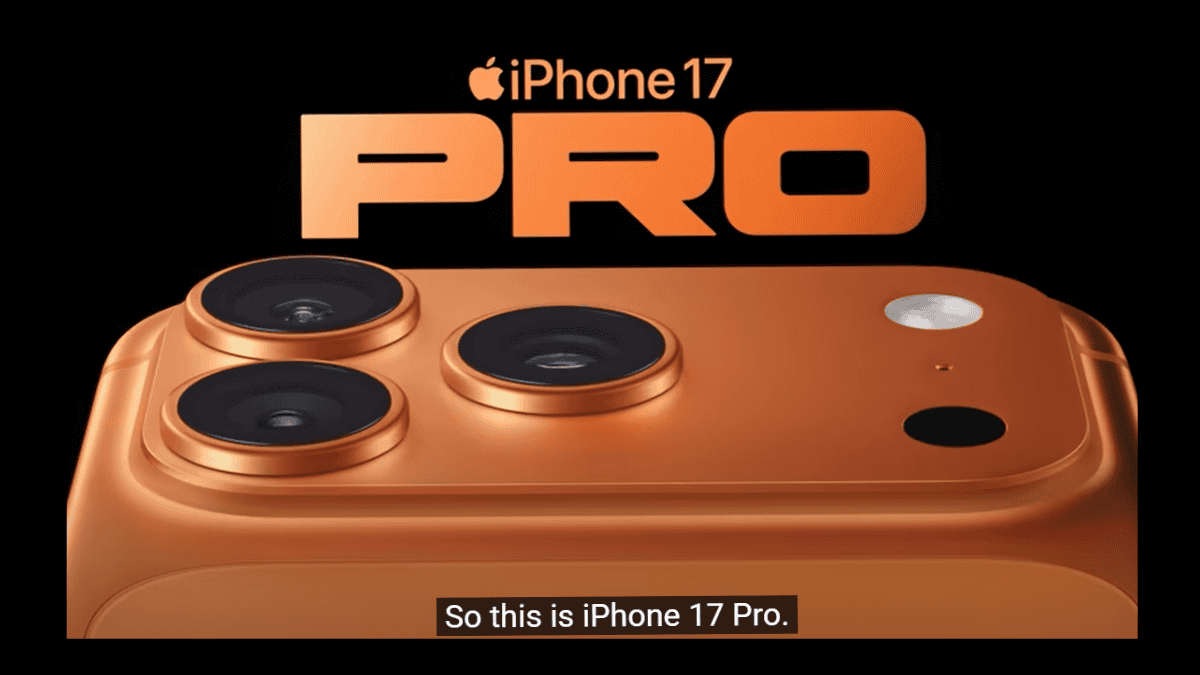
The iPhone 17 Pro and Pro Max are rumoured to stick with 48 MP triple-lens systems, refined with better optics and low-light performance. Apple is also upgrading the front camera to 24 MP across all models, ensuring clearer selfies and sharper video calls. While Apple isn’t chasing megapixel numbers, its strength lies in computational photography, which balances color, detail, and stability for consistent results.
Samsung, on the other hand, may go all out with the Galaxy S26 Ultra. Some leaks suggest a 324 MP ISOCELL sensor, though others indicate Samsung may refine its 200 MP main camera instead. Either way, the focus will be on hardware dominance, combined with powerful AI-driven zoom and image processing.
For casual users, Apple’s iPhones will continue to provide reliable and natural-looking photos. But for photography enthusiasts, the Galaxy S26 Ultra’s huge sensor could make it a game-changer.
iPhone 17 vs Samsung Galaxy S26 | Battery and Charging
Battery life is a major concern for most buyers, and this year both Apple and Samsung are making big moves.
The iPhone 17 Pro Max is expected to pack a 5,000 mAh battery, the largest in iPhone history. This, combined with the efficiency of the A19 Pro chip, could make it the longest-lasting iPhone ever.
Samsung is rumored to take things further, with some reports hinting at silicon-carbon batteries for the Galaxy S26 Ultra. These could push capacity beyond 6,000 mAh, setting a new benchmark for endurance.
When it comes to charging, both companies are adopting Qi2 magnetic wireless charging, ensuring faster and more universal compatibility. Apple will also keep improving MagSafe, while Samsung may focus on making its system more open to third-party accessories.
Software and AI
Apple’s iOS 26 will bring deeper AI integration, smarter widgets, and more intuitive multitasking. The iPhone 17 series will likely introduce upgraded AI tools for photography, productivity, and personalization.
Samsung’s approach is more open. The Galaxy S26 lineup is expected to integrate Perplexity AI alongside Google Gemini and Bixby, giving users multiple assistants to choose from. Samsung aims to make AI a core part of the experience, from photo editing to advanced search.
If you prefer simplicity and polish, Apple will likely deliver a seamless AI experience. If you value choice and flexibility, Samsung may be the better fit.
iPhone 17 vs Galaxy S26: At a Glance
| Feature | iPhone 17 Series | Galaxy S26 Series |
|---|---|---|
| Design | Slim Air (5.5 mm), titanium-aluminum | Slim Edge, horizontal camera bar |
| Display | LTPO OLED, 120 Hz ProMotion | Dynamic AMOLED, up to 144 Hz |
| Processor | A19 / A19 Pro | Exynos 2600 / Snapdragon |
| Camera | 48 MP triple-lens, 24 MP front | 200–324 MP Ultra sensor |
| Battery | Up to 5,000 mAh | 4,200–6,000+ mAh |
| Charging | MagSafe, Qi2 support | Qi2, faster wireless |
| Software | iOS 26, Apple AI | Android with Gemini, Perplexity AI |
| Launch | September 2025 | Early 2026 |
Final Verdict
The iPhone 17 series and Galaxy S26 series are shaping up to be two of the most powerful smartphones of 2025. Apple is focused on thin design, better efficiency, and refined cameras, while Samsung is aiming for hardware dominance, massive batteries, and AI-driven innovation.
- If you want a lightweight design and a seamless ecosystem, the iPhone 17 Air or iPhone 17 Pro Max will appeal to you.
- If you prefer cutting-edge camera hardware and industry-leading battery life, the Galaxy S26 Ultra could be the ultimate choice.
Ultimately, the decision will come down to whether you prefer Apple’s closed but polished ecosystem or Samsung’s more flexible Android experience. Either way, both devices will define the flagship smartphone market in the coming year.